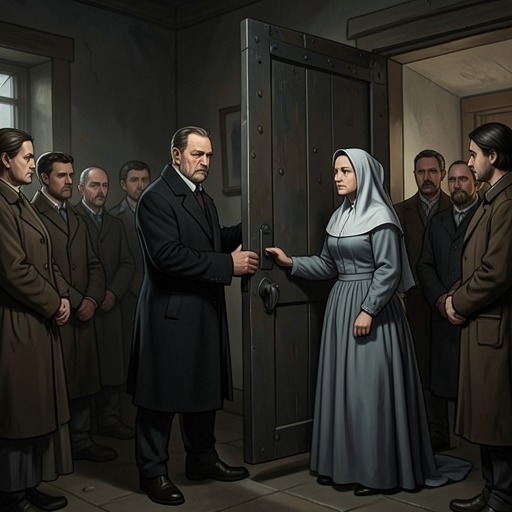
Editor
The Sorrows of Young WertherThe Editor is the retrospective narrator who bridges the gap in the record of Werther’s last days. By interrupting the correspondence to assemble a connected account from testimony, letters, and surviving fragments, he turns the novel’s intimate epistolary record into an openly mediated reconstruction.
Identity and Narrative Position
The Editor enters as a distinct framing voice, addressing the reader rather than continuing Werther’s correspondence. His appearance marks a change in narrative form: where the preceding account has depended on letters, the Editor supplies a connected narration for the final period that those letters do not adequately document.
Editorial Method
He calls the lack of original evidence for Werther’s last remarkable days a matter of regret. To fill that gap, he says he has collected information directly from people familiar with Werther’s history; their accounts agree on the principal story, differing only in what he considers unimportant particulars. The Editor nevertheless notes that their opinions and judgments about the characters vary, distinguishing agreement about events from disagreement about how people should be understood.
He presents his task as a conscientious report rather than an unqualified claim to know the motives behind every action. Alongside the collected facts, he includes letters by the deceased and attends especially to even the slightest fragment in Werther’s hand, because the motives of people who are not ordinary are difficult to establish. The method therefore combines testimony with personal documents while preserving uncertainty about what those materials can prove.
Narrative Role and Limits
The Editor’s intervention makes the break in the correspondence part of the story’s form: the reader is told that the record is incomplete before receiving the reconstruction meant to replace it. His account offers a more connected chronology, but its dependence on other people’s reports—and their differing judgments—keeps that account visibly mediated. The Editor does not claim access to a single, definitive explanation of Werther’s motives; instead, he foregrounds the difficulty of recovering them from the evidence that remains.